

COLD SPRING HARBOR, N.Y., Feb. 25, 2026 /PRNewswire/ — What does it take to make AI that can pass as human? Try massive clusters of supercomputers. To build human-like intelligence, computer scientists think big. However, for neuroscientists who want to understand how real brains work, today’s AI only goes so far, as it replaces one deeply complicated system (the brain) with another (AI). How then do we figure out the inner workings of the biological brain? To answer this question, Cold Spring Harbor Laboratory Assistant Professor Benjamin Cowley is thinking small.
In collaboration with Carnegie Mellon University Professor Matthew Smith and Princeton University Professor Jonathan Pillow, Cowley has helped develop a new AI model much smaller and simpler than today’s “state-of-the-art” systems, yet far better at illustrating how the brain makes sense of visual stimuli. In previous work, Cowley trained AI to anticipate neural responses in fruit flies. This time, he’s set his sights on macaque, a species of monkey whose brains are much closer to humans.
In a new study published in Nature, Cowley and colleagues present macaques with sets of carefully curated natural images and track which neurons in the animals’ visual cortex fire in response to each picture. From there, they first train large AI models to predict neural responses to specific images until they outperform competing models by more than 30%. Then, they use compression technology to shrink the large AI model to about 1/1,000 the size. The result is a vision model small enough for an email attachment.
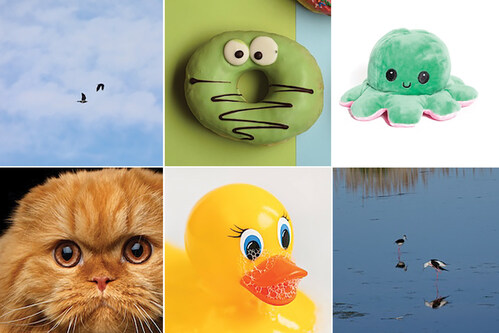
Finding that AI models of the brain could be this tiny is huge in itself. But Cowley goes further, pinpointing the inner workings of these models. This analysis reveals something extraordinary. The compact model neurons all break down images into low-level features like edges and colors, then form unique preferences by consolidating this information in different ways. What does this mean for primates like us? Cowley offers one example: “In the monkey’s brain—and in our brains, too, most likely—there’s a group of V4 neurons that love dots.”
In other words, there are neurons in your brain that specialize in dot detection. That might seem random, but think about the key features of the face. What are eyes but dots loaded with information? Consider how important eye contact is in daily life.
Looking ahead, the findings have Cowley thinking about building AI models of mental health conditions. “For example, in Alzheimer’s dementia, we know synapses are lost,” he explains. “If we know the images that drive neurons to talk to each other, we can potentially rebuild synapses once thought lost to disease.”
Who knows? Thanks to work like this, one day you might be able to stave off—or even treat—neurodegenerative disease by looking at special pictures. Just wait and see.
About Cold Spring Harbor Laboratory
Cold Spring Harbor Laboratory is one of the world’s most renowned institutions for biomedical research and education. Founded in 1890 and located on the North Shore of Long Island, the 501(c)(3) nonprofit inspires curiosity, discovery, and innovation in molecular biology, genetics, cancer, neuroscience, and artificial intelligence. For more information, visit www.cshl.edu.
SOURCE Cold Spring Harbor Laboratory